
Lifestyle
How to Clean a Leather Couch: The Complete Step-by-Step Guide

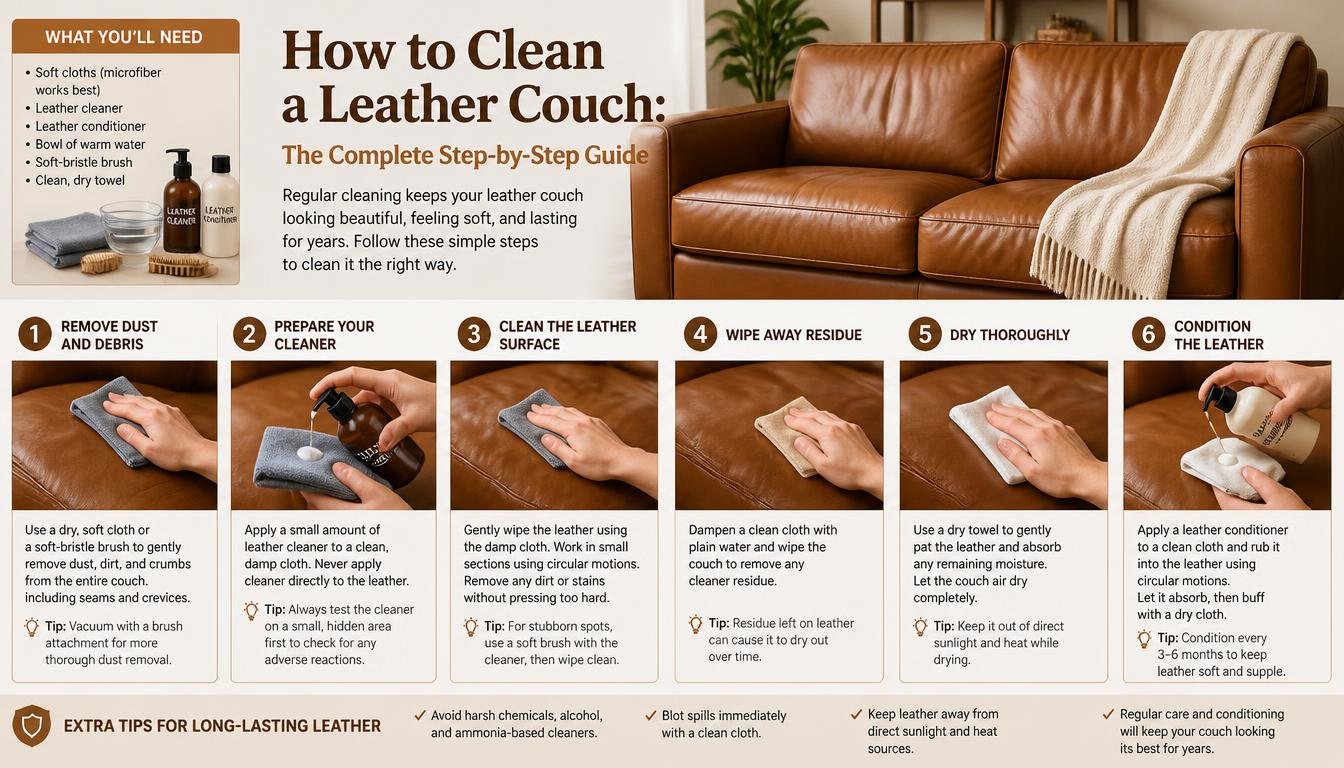
A leather couch is one of the most stylish and durable pieces of furniture you can own, but it also requires proper care to maintain its luxurious appearance. Unlike fabric upholstery, leather needs gentle cleaning methods that remove dirt, stains, and oils without drying out or damaging the material. Many homeowners make the mistake of using harsh cleaners or excessive water, which can lead to fading, cracking, or permanent discoloration.
If you are wondering how to clean leather couch safely and effectively, this comprehensive guide covers everything you need to know. From routine maintenance and deep cleaning to stain removal and leather conditioning, you’ll learn professional techniques that keep your furniture looking beautiful for years.
Why Regular Leather Couch Cleaning Matters
Cleaning your leather couch is about much more than appearance. Dust, body oils, pet hair, food crumbs, and everyday dirt slowly accumulate on the surface. Over time these contaminants wear down the protective finish of the leather, causing it to become dull, dry, and prone to cracking.
Routine leather couch cleaning offers several benefits:
- Extends furniture lifespan
- Maintains soft texture
- Prevents permanent stains
- Removes bacteria and allergens
- Preserves natural shine
- Prevents leather from drying out
- Saves money on professional restoration
Regular maintenance is always easier than repairing damaged leather.
Know Your Leather Before Cleaning
Before cleaning your leather sofa, identify the type of leather you own. Different materials require different cleaning methods.
Protected Leather
Protected leather has a protective coating that makes it resistant to stains and moisture. This is the most common leather found in household furniture.
Aniline Leather
Aniline leather has no protective coating, making it softer and more luxurious but also more delicate. It absorbs liquids quickly and requires extra care.
Semi-Aniline Leather
Semi-aniline leather includes a light protective finish while retaining much of its natural appearance.
Bonded Leather
Bonded leather contains leather fibers mixed with synthetic materials. It requires gentle cleaning to prevent peeling.
Always check the manufacturer’s care instructions before using any cleaner.
Cleaning Supplies You’ll Need
Gather these supplies before starting:
- Soft microfiber cloths
- Vacuum cleaner with brush attachment
- Distilled water
- Mild dish soap
- Leather cleaner
- Leather conditioner
- Soft sponge
- Cotton swabs
- Spray bottle
- Dry towel
Avoid bleach, ammonia, alcohol-based cleaners, acetone, furniture polish, and abrasive brushes.
Step 1: Vacuum the Leather Couch
The first step in leather couch cleaning is removing loose dirt and dust.
Use a vacuum cleaner with a soft brush attachment. Carefully vacuum every surface, including seat cushions, armrests, seams, corners, and underneath removable cushions. Dust particles may seem harmless, but they act like tiny abrasives that gradually scratch the leather whenever someone sits on the couch.
Vacuuming also prepares the surface for more effective cleaning.
Step 2: Wipe Away Surface Dirt
Lightly dampen a microfiber cloth with distilled water. Wipe the leather gently using circular motions.
Avoid soaking the cloth because too much moisture can penetrate the leather and cause damage.
This simple cleaning removes fingerprints, body oils, and everyday dust without affecting the leather finish.
Step 3: Prepare a Gentle Cleaning Solution
Mix:
- 2 cups distilled water
- A few drops of mild dish soap
Stir gently without creating excessive bubbles.
Never pour the solution directly onto the leather.
Instead, dampen your microfiber cloth and wring out excess liquid before wiping the couch.
Step 4: Clean the Entire Leather Couch
Work in small sections rather than cleaning the whole couch at once.
Use gentle circular motions while wiping each section. Pay special attention to armrests, headrests, and seating areas because these accumulate the most body oils.
After cleaning each section, immediately wipe it dry with another microfiber cloth.
Allow the leather to air dry naturally.
How to Remove Stains from a Leather Couch
Different stains require different treatments.
Food Stains
Wipe immediately using a damp microfiber cloth.
If needed, use mild soap solution.
Dry thoroughly afterward.
Ink Stains
Dip a cotton swab into rubbing alcohol.
Gently dab the stain.
Never rub aggressively.
Once the stain disappears, wipe with distilled water and apply leather conditioner.
Grease Stains
Sprinkle baking soda or cornstarch over the grease.
Leave overnight.
Vacuum away the powder.
Repeat if necessary.
Pet Stains
Mix mild soap with distilled water.
Clean gently.
Dry immediately.
Finish with leather conditioner.
Mold and Mildew
Mix equal parts water and white vinegar.
Lightly dampen a cloth.
Clean affected areas carefully.
Allow complete air drying.
How to Remove Odors from a Leather Couch
Leather naturally absorbs odors from pets, smoke, food, and moisture.
To eliminate odors:
- Vacuum thoroughly.
- Clean the surface.
- Place baking soda near the couch overnight (do not spread it directly on unfinished leather).
- Improve room ventilation.
- Use leather-safe odor eliminators if necessary.
Avoid spraying air fresheners directly onto leather.
How to Deep Clean a Leather Couch
Deep cleaning should be performed every six to twelve months.
Begin by vacuuming every surface carefully before wiping the leather with a damp microfiber cloth to remove loose dirt and body oils. Apply a high-quality leather cleaner according to the manufacturer’s instructions, working on one section at a time with gentle circular motions. Remove any remaining cleaner with a clean cloth and allow the couch to dry naturally. Once completely dry, finish the process by applying a leather conditioner to restore moisture and flexibility. This complete cleaning routine helps maintain the leather’s appearance while protecting it from premature wear.
Why Leather Conditioner Is Important
Cleaning removes dirt but may also reduce some natural oils.
Leather conditioner helps:
- Prevent cracking
- Restore softness
- Improve flexibility
- Enhance shine
- Protect against future damage
- Extend furniture lifespan
Apply conditioner every six months or according to manufacturer recommendations.
Homemade Leather Cleaner
Many homeowners prefer natural cleaners.
A simple homemade cleaner includes:
- 2 cups distilled water
- 1 teaspoon mild dish soap
Mix thoroughly.
Apply with a microfiber cloth.
Never oversaturate the leather.
Avoid lemon juice, baking soda paste, bleach, ammonia, or strong vinegar mixtures because these may damage the leather finish.
Common Mistakes to Avoid
Many leather couches are damaged because of improper cleaning rather than everyday use. Avoid using excessive water, as moisture can seep into the leather and weaken its structure. Never scrub the surface with hard brushes or abrasive pads, since these can scratch the protective finish. Household cleaners containing bleach, ammonia, or strong chemicals should also be avoided because they may discolor or dry out the leather. Direct sunlight and high heat from hair dryers or heaters can cause fading and cracking, so always let the couch air dry naturally. Finally, do not skip conditioning after deep cleaning, as conditioning helps replace lost moisture and keeps the leather soft and flexible over time.
Leather Couch Maintenance Tips
Keeping a leather couch in excellent condition requires consistent care rather than occasional deep cleaning. Dust the surface weekly with a soft microfiber cloth and vacuum it every month to remove dirt from seams and crevices. Clean spills as soon as they happen to prevent stains from setting into the leather. Position the couch away from direct sunlight and heat sources to reduce fading and drying. Rotate seat cushions when possible to promote even wear, and apply a quality leather conditioner every six months to maintain softness and durability. With these simple habits, your leather furniture can remain attractive and comfortable for many years.
When to Call a Professional
Professional leather cleaning may be necessary if you notice:
- Large ink stains
- Paint spills
- Mold infestation
- Deep scratches
- Color fading
- Water damage
- Antique leather furniture
Professionals use specialized products that safely restore damaged leather.
Final Thoughts
Learning how to clean leather couch properly is one of the best ways to protect your investment and preserve the elegance of your furniture. Regular vacuuming, gentle cleaning with leather-safe products, prompt stain removal, and routine conditioning all work together to keep leather soft, clean, and resistant to everyday wear. By avoiding harsh chemicals and following a consistent maintenance routine, you can enjoy a couch that continues to look luxurious, feel comfortable, and last for many years.
Frequently Asked Questions (FAQ)
How often should I clean my leather couch?
Dust your leather couch every week, perform a light cleaning once a month, and deep clean and condition it every six to twelve months, depending on how frequently it is used.
Can I use vinegar to clean leather?
A diluted vinegar solution can be used sparingly on certain stains, but it should not be your regular cleaner. A leather-specific cleaner is generally the safest choice.
What is the best homemade leather cleaner?
A mixture of distilled water and a few drops of mild dish soap is one of the safest homemade options for routine cleaning.
Can I use baby wipes on leather furniture?
No. Many baby wipes contain chemicals, fragrances, or preservatives that may damage the leather finish over time.
How do I remove old stains from a leather couch?
Start with a leather cleaner designed for upholstery. If the stain remains or has penetrated deeply into the leather, it is best to seek professional cleaning rather than risk damaging the material.
Should I condition leather after cleaning?
Yes. Conditioning helps restore moisture lost during cleaning, prevents cracking, and keeps the leather soft and supple.
Can baking soda damage leather?
Dry baking soda can be useful for absorbing grease or odors, but avoid making abrasive baking soda pastes or leaving residue on the leather for extended periods. Always remove it gently and follow with appropriate leather care.
Is steam cleaning safe for leather couches?
No. Steam introduces excessive heat and moisture, which can damage leather, strip protective coatings, and cause warping or cracking. Use leather-specific cleaning methods instead.
Lifestyle
Costco Is Selling Anthropologie Lookalike Icon Glasses for Cheaper – The Budget-Friendly Home Trend Everyone Is Talking About

Lifestyle
Aldi Is Releasing New Grocery Items and Gifts for December: Everything Coming This Holiday Season

Lifestyle
How to Remove Grass Stains: The Ultimate Guide to Removing Grass Stains from Clothes, Shoes, and Fabric

Grass stains are among the most stubborn stains people encounter, especially after outdoor activities, gardening, sports, hiking, or children playing in the yard. Unlike ordinary dirt stains, grass stains contain chlorophyll, natural plant proteins, and organic pigments that bind tightly to fabric fibers. Because of this unique composition, simply washing clothing with regular detergent often isn’t enough to remove them completely. Many people accidentally make the stain worse by using hot water or putting stained clothes directly into the dryer before treating the affected area.
The good news is that grass stains can usually be removed successfully when treated correctly and as soon as possible. Whether you’re dealing with fresh stains on children’s school uniforms, dried stains on jeans, muddy sports uniforms, or green marks on white shirts, there are proven methods that restore fabrics without causing damage. This guide explains everything you need to know about removing grass stains using household ingredients, commercial stain removers, and proper laundry techniques. By following these expert tips, you can save your favorite clothes and prevent permanent discoloration.
What Causes Grass Stains?
Grass stains are different from ordinary dirt because they are made from chlorophyll, xanthophylls, proteins, and natural plant juices. These compounds penetrate fabric fibers and behave more like dye than surface dirt. This is why rubbing with plain water rarely works. The longer the stain remains untreated, the more deeply the pigments bond with the fibers, making removal increasingly difficult.
Children’s clothing, athletic uniforms, denim jeans, socks, sneakers, and gardening clothes are especially vulnerable because they frequently come into direct contact with grass. Warm weather and sweaty fabrics can also make the pigments absorb more deeply into clothing, creating stains that require stronger cleaning methods.
How to Remove Fresh Grass Stains
Fresh grass stains are much easier to remove than old ones. Begin by gently brushing away any loose dirt without rubbing the stain further into the fabric. Rinse the stained area under cold running water from the back of the fabric so the stain is pushed outward rather than deeper into the fibers. Apply a quality liquid laundry detergent directly onto the stain and gently work it into the fabric using your fingers or a soft-bristled toothbrush. Allow the detergent to sit for at least fifteen to twenty minutes before washing the garment according to its care label. After washing, inspect the stained area carefully before drying. If any green discoloration remains, repeat the treatment because heat from the dryer can permanently set the stain.
How to Remove Old Grass Stains
Old grass stains require more patience because the pigments have already bonded with the fibers. Start by soaking the garment in cold water for thirty minutes to loosen the dried stain. Next, prepare a paste using baking soda and water, applying it generously over the affected area. Let the paste remain on the stain for approximately thirty minutes before gently scrubbing with a soft toothbrush. Apply liquid detergent afterward and wash the garment using cold or warm water, depending on the fabric’s care instructions. If traces of the stain remain, repeat the process rather than increasing water temperature, which may set any remaining pigment.
How to Remove Grass Stains Naturally
Natural cleaning methods are popular because they are inexpensive, environmentally friendly, and safe for many fabrics. White vinegar is particularly effective because its mild acidity helps loosen plant pigments without being excessively harsh. Mix equal parts white vinegar and water, apply the solution to the stain, and allow it to sit for fifteen minutes before washing. Baking soda also works well by gently lifting stains while acting as a mild abrasive during brushing. Lemon juice can brighten white fabrics when combined with sunlight, although it should be used carefully on colored clothing because it may have a slight bleaching effect. These household ingredients often provide excellent results when stains are treated promptly.
Best Commercial Grass Stain Removers
Commercial stain removers are formulated to break down proteins and plant pigments more efficiently than ordinary detergents. Enzyme-based stain removers are particularly effective because they target the organic compounds found in grass. Oxygen-based cleaners can also brighten white fabrics without the harshness associated with chlorine bleach. Always follow the manufacturer’s instructions and test the product on an inconspicuous area before treating delicate fabrics such as silk or wool.
How to Remove Grass Stains from White Clothes
White clothing tends to show grass stains more dramatically, but it also offers more treatment options. Begin by treating the stain with liquid detergent before applying hydrogen peroxide carefully to the stained area. Allow the solution to work for several minutes before washing with an oxygen-based bleach designed for white fabrics. Avoid chlorine bleach on protein-based stains because it can sometimes make discoloration worse. Check that the stain has disappeared completely before drying the garment to avoid permanently setting any remaining pigment.
How to Remove Grass Stains from Colored Clothes
Colored clothing requires a gentler approach because aggressive stain treatments may fade dyes. Use a color-safe detergent and avoid strong bleaching agents. Test any homemade or commercial solution on a hidden section of the garment before applying it to the stain. Patience often produces better results than harsh scrubbing, which can damage fibers and spread the stain further across the fabric.
How to Remove Grass Stains from Shoes
Grass stains commonly appear on canvas sneakers, athletic shoes, and fabric footwear. Remove loose dirt using a dry brush before cleaning the stained area with a mixture of warm water, liquid detergent, and a soft brush. For stubborn marks, apply a baking soda paste and scrub gently in circular motions. Wipe away residue with a damp cloth and allow the shoes to air dry naturally. Avoid placing fabric shoes near direct heat because it can damage adhesives and alter their shape.
Mistakes to Avoid
Many people unintentionally make grass stains harder to remove by using hot water immediately after staining the fabric. Heat causes proteins and pigments to bind more firmly with fibers, making later removal far more difficult. Another common mistake is rubbing the stain aggressively, which pushes the pigment deeper into the material instead of lifting it away. Using the dryer before confirming the stain has disappeared is another frequent error because dryer heat permanently sets many stains. Taking a few extra minutes to pretreat clothing properly often saves much more time and frustration later.
Tips to Prevent Grass Stains
Although grass stains cannot always be avoided, wearing appropriate clothing during outdoor activities significantly reduces the risk of permanent damage. Sports uniforms should be rinsed soon after games, children’s play clothes should be treated before laundry day, and gardening clothes should be washed separately from lightly soiled garments. Keeping a stain remover spray in your laundry room allows you to treat fresh stains immediately, greatly improving the likelihood of complete removal.
Conclusion
Knowing how to remove grass stains properly can save your favorite clothes, shoes, sports uniforms, and household fabrics from permanent discoloration. The key to successful grass stain removal is acting quickly, using the correct cleaning products, and avoiding heat until the stain has disappeared completely. Whether you prefer natural remedies such as vinegar and baking soda or enzyme-based commercial stain removers, the right technique makes all the difference. By following the methods outlined in this guide and treating stains before they have time to set, you can keep your clothing looking clean, fresh, and ready for every outdoor adventure.
Frequently Asked Questions (FAQs)
1. What removes grass stains the fastest?
Liquid laundry detergent combined with cold water and immediate treatment is usually the fastest and most effective solution for fresh grass stains.
2. Can baking soda remove grass stains?
Yes. Baking soda helps loosen grass pigments, especially when mixed into a paste and gently brushed into the stained fabric before washing.
3. Does vinegar remove grass stains?
White vinegar can help break down plant pigments and works well as a natural stain remover for many washable fabrics.
4. Can old grass stains still be removed?
Yes. Older stains often require soaking, repeated treatments, and enzyme-based cleaners, but many can still be removed successfully.
5. Should I use hot or cold water?
Cold water is recommended because hot water can set grass stains permanently into fabric fibers.
6. Can bleach remove grass stains?
Oxygen bleach is generally safer and more effective than chlorine bleach for many grass stains, especially on white clothing.
7. Why are grass stains so difficult to remove?
Grass contains chlorophyll, proteins, and natural pigments that penetrate deep into fabric fibers and behave similarly to dyes, making them harder to wash away than ordinary dirt.
8. Can toothpaste remove grass stains?
Some non-gel white toothpastes may help with minor stains because they contain mild abrasives, but they are generally less effective than detergent or enzyme-based stain removers.
9. Is hydrogen peroxide safe for grass stains?
Hydrogen peroxide can be effective on white or colorfast fabrics, but it should always be tested on a hidden area first to ensure it does not affect the fabric’s color.
10. How can I prevent grass stains from becoming permanent?
Treat stains as soon as possible with cold water and detergent, avoid rubbing aggressively, and never place the garment in a dryer until you are certain the stain has been completely removed.

Dan Cogdell: Career, Background, Legal Work, and What to Know

2025 BMW 3 Series: Complete Guide to Price, Specs, Features, and Performance

Karrueche Tran Naked Search: Understanding Online Privacy and Celebrity Rumors

The Complete Guide to Features, Benefits, Trading Tools, and Market Analysis

CDiPhone: Complete Guide, Features, Benefits, Review & Buying Tips (2026)

The Complete Guide to Understanding, Using, and Optimizing Tags for Better Organization and SEO
 Technology3 months ago
The Complete Guide to Features, Benefits, Trading Tools, and Market Analysis
- Technology3 months ago
CDiPhone: Complete Guide, Features, Benefits, Review & Buying Tips (2026)
- Digital3 months ago
The Complete Guide to Understanding, Using, and Optimizing Tags for Better Organization and SEO
- Entertainment3 months ago
What Is Satta Marking? Complete Guide for Beginners
- Tech3 months ago
DX Flash: Complete Guide to Features, Uses, Installation, Benefits, and Troubleshooting
- Celebrity3 months ago
Trump Tees It Up With Hall of Fame: Complete Story, Event Highlights, and Why It Matters
- Entertainment3 months ago
MMA Stream Reddit: 9 Powerful Legal Ways to Watch Fights Online
- Lifestyle3 months ago
B&Q Altrincham: Complete Store Guide, Products, Services, Opening Hours & Shopping Tips