
Lifestyle
Costco Is Selling Anthropologie Lookalike Icon Glasses for Cheaper – The Budget-Friendly Home Trend Everyone Is Talking About


Lifestyle
Aldi Is Releasing New Grocery Items and Gifts for December: Everything Coming This Holiday Season

Lifestyle
How to Remove Grass Stains: The Ultimate Guide to Removing Grass Stains from Clothes, Shoes, and Fabric

Grass stains are among the most stubborn stains people encounter, especially after outdoor activities, gardening, sports, hiking, or children playing in the yard. Unlike ordinary dirt stains, grass stains contain chlorophyll, natural plant proteins, and organic pigments that bind tightly to fabric fibers. Because of this unique composition, simply washing clothing with regular detergent often isn’t enough to remove them completely. Many people accidentally make the stain worse by using hot water or putting stained clothes directly into the dryer before treating the affected area.
The good news is that grass stains can usually be removed successfully when treated correctly and as soon as possible. Whether you’re dealing with fresh stains on children’s school uniforms, dried stains on jeans, muddy sports uniforms, or green marks on white shirts, there are proven methods that restore fabrics without causing damage. This guide explains everything you need to know about removing grass stains using household ingredients, commercial stain removers, and proper laundry techniques. By following these expert tips, you can save your favorite clothes and prevent permanent discoloration.
What Causes Grass Stains?
Grass stains are different from ordinary dirt because they are made from chlorophyll, xanthophylls, proteins, and natural plant juices. These compounds penetrate fabric fibers and behave more like dye than surface dirt. This is why rubbing with plain water rarely works. The longer the stain remains untreated, the more deeply the pigments bond with the fibers, making removal increasingly difficult.
Children’s clothing, athletic uniforms, denim jeans, socks, sneakers, and gardening clothes are especially vulnerable because they frequently come into direct contact with grass. Warm weather and sweaty fabrics can also make the pigments absorb more deeply into clothing, creating stains that require stronger cleaning methods.
How to Remove Fresh Grass Stains
Fresh grass stains are much easier to remove than old ones. Begin by gently brushing away any loose dirt without rubbing the stain further into the fabric. Rinse the stained area under cold running water from the back of the fabric so the stain is pushed outward rather than deeper into the fibers. Apply a quality liquid laundry detergent directly onto the stain and gently work it into the fabric using your fingers or a soft-bristled toothbrush. Allow the detergent to sit for at least fifteen to twenty minutes before washing the garment according to its care label. After washing, inspect the stained area carefully before drying. If any green discoloration remains, repeat the treatment because heat from the dryer can permanently set the stain.
How to Remove Old Grass Stains
Old grass stains require more patience because the pigments have already bonded with the fibers. Start by soaking the garment in cold water for thirty minutes to loosen the dried stain. Next, prepare a paste using baking soda and water, applying it generously over the affected area. Let the paste remain on the stain for approximately thirty minutes before gently scrubbing with a soft toothbrush. Apply liquid detergent afterward and wash the garment using cold or warm water, depending on the fabric’s care instructions. If traces of the stain remain, repeat the process rather than increasing water temperature, which may set any remaining pigment.
How to Remove Grass Stains Naturally
Natural cleaning methods are popular because they are inexpensive, environmentally friendly, and safe for many fabrics. White vinegar is particularly effective because its mild acidity helps loosen plant pigments without being excessively harsh. Mix equal parts white vinegar and water, apply the solution to the stain, and allow it to sit for fifteen minutes before washing. Baking soda also works well by gently lifting stains while acting as a mild abrasive during brushing. Lemon juice can brighten white fabrics when combined with sunlight, although it should be used carefully on colored clothing because it may have a slight bleaching effect. These household ingredients often provide excellent results when stains are treated promptly.
Best Commercial Grass Stain Removers
Commercial stain removers are formulated to break down proteins and plant pigments more efficiently than ordinary detergents. Enzyme-based stain removers are particularly effective because they target the organic compounds found in grass. Oxygen-based cleaners can also brighten white fabrics without the harshness associated with chlorine bleach. Always follow the manufacturer’s instructions and test the product on an inconspicuous area before treating delicate fabrics such as silk or wool.
How to Remove Grass Stains from White Clothes
White clothing tends to show grass stains more dramatically, but it also offers more treatment options. Begin by treating the stain with liquid detergent before applying hydrogen peroxide carefully to the stained area. Allow the solution to work for several minutes before washing with an oxygen-based bleach designed for white fabrics. Avoid chlorine bleach on protein-based stains because it can sometimes make discoloration worse. Check that the stain has disappeared completely before drying the garment to avoid permanently setting any remaining pigment.
How to Remove Grass Stains from Colored Clothes
Colored clothing requires a gentler approach because aggressive stain treatments may fade dyes. Use a color-safe detergent and avoid strong bleaching agents. Test any homemade or commercial solution on a hidden section of the garment before applying it to the stain. Patience often produces better results than harsh scrubbing, which can damage fibers and spread the stain further across the fabric.
How to Remove Grass Stains from Shoes
Grass stains commonly appear on canvas sneakers, athletic shoes, and fabric footwear. Remove loose dirt using a dry brush before cleaning the stained area with a mixture of warm water, liquid detergent, and a soft brush. For stubborn marks, apply a baking soda paste and scrub gently in circular motions. Wipe away residue with a damp cloth and allow the shoes to air dry naturally. Avoid placing fabric shoes near direct heat because it can damage adhesives and alter their shape.
Mistakes to Avoid
Many people unintentionally make grass stains harder to remove by using hot water immediately after staining the fabric. Heat causes proteins and pigments to bind more firmly with fibers, making later removal far more difficult. Another common mistake is rubbing the stain aggressively, which pushes the pigment deeper into the material instead of lifting it away. Using the dryer before confirming the stain has disappeared is another frequent error because dryer heat permanently sets many stains. Taking a few extra minutes to pretreat clothing properly often saves much more time and frustration later.
Tips to Prevent Grass Stains
Although grass stains cannot always be avoided, wearing appropriate clothing during outdoor activities significantly reduces the risk of permanent damage. Sports uniforms should be rinsed soon after games, children’s play clothes should be treated before laundry day, and gardening clothes should be washed separately from lightly soiled garments. Keeping a stain remover spray in your laundry room allows you to treat fresh stains immediately, greatly improving the likelihood of complete removal.
Conclusion
Knowing how to remove grass stains properly can save your favorite clothes, shoes, sports uniforms, and household fabrics from permanent discoloration. The key to successful grass stain removal is acting quickly, using the correct cleaning products, and avoiding heat until the stain has disappeared completely. Whether you prefer natural remedies such as vinegar and baking soda or enzyme-based commercial stain removers, the right technique makes all the difference. By following the methods outlined in this guide and treating stains before they have time to set, you can keep your clothing looking clean, fresh, and ready for every outdoor adventure.
Frequently Asked Questions (FAQs)
1. What removes grass stains the fastest?
Liquid laundry detergent combined with cold water and immediate treatment is usually the fastest and most effective solution for fresh grass stains.
2. Can baking soda remove grass stains?
Yes. Baking soda helps loosen grass pigments, especially when mixed into a paste and gently brushed into the stained fabric before washing.
3. Does vinegar remove grass stains?
White vinegar can help break down plant pigments and works well as a natural stain remover for many washable fabrics.
4. Can old grass stains still be removed?
Yes. Older stains often require soaking, repeated treatments, and enzyme-based cleaners, but many can still be removed successfully.
5. Should I use hot or cold water?
Cold water is recommended because hot water can set grass stains permanently into fabric fibers.
6. Can bleach remove grass stains?
Oxygen bleach is generally safer and more effective than chlorine bleach for many grass stains, especially on white clothing.
7. Why are grass stains so difficult to remove?
Grass contains chlorophyll, proteins, and natural pigments that penetrate deep into fabric fibers and behave similarly to dyes, making them harder to wash away than ordinary dirt.
8. Can toothpaste remove grass stains?
Some non-gel white toothpastes may help with minor stains because they contain mild abrasives, but they are generally less effective than detergent or enzyme-based stain removers.
9. Is hydrogen peroxide safe for grass stains?
Hydrogen peroxide can be effective on white or colorfast fabrics, but it should always be tested on a hidden area first to ensure it does not affect the fabric’s color.
10. How can I prevent grass stains from becoming permanent?
Treat stains as soon as possible with cold water and detergent, avoid rubbing aggressively, and never place the garment in a dryer until you are certain the stain has been completely removed.
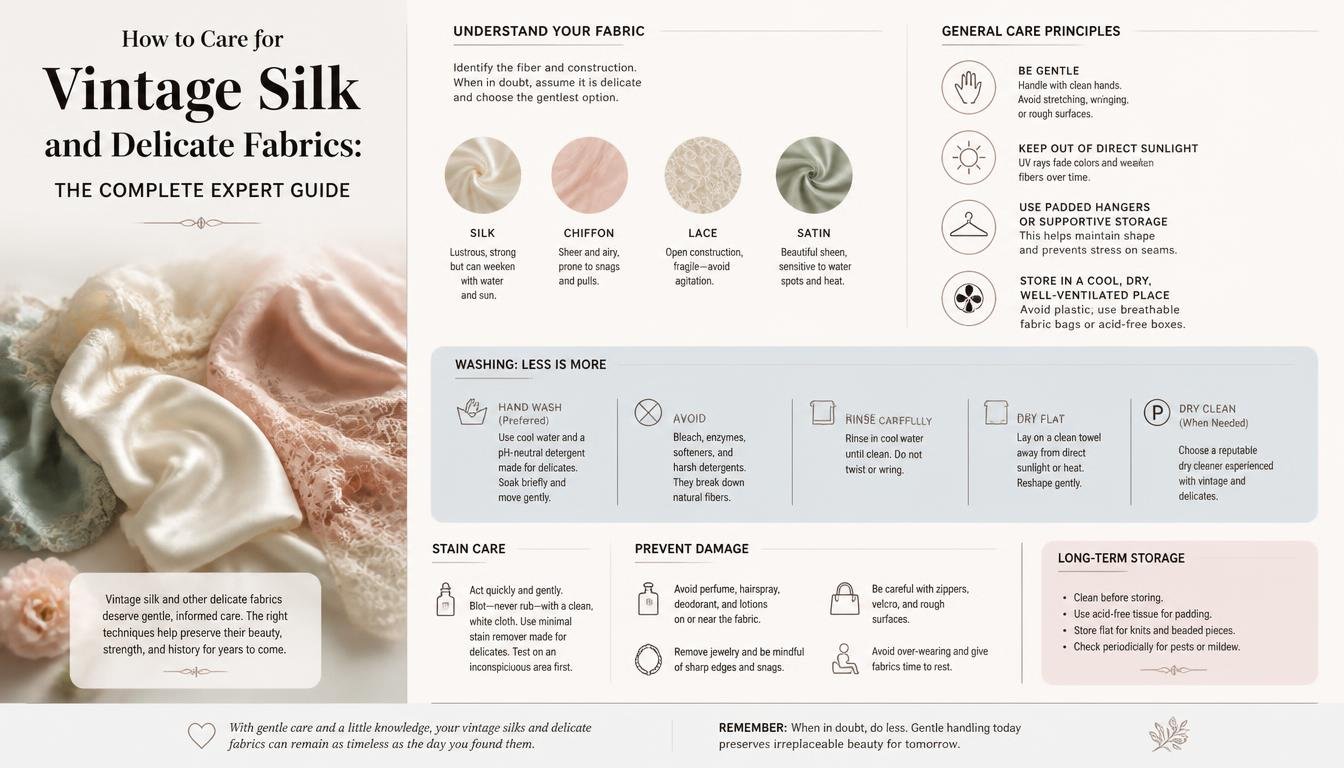
Vintage silk and delicate fabrics are more than beautiful textiles—they are treasured pieces of history that deserve thoughtful care. Whether you own an heirloom wedding dress, an antique silk scarf, a vintage evening gown, or delicate lace garments, proper maintenance is essential to preserve their beauty, texture, and value for years to come. Unlike modern fabrics, vintage textiles often become fragile with age due to exposure to sunlight, humidity, dust, and repeated handling. Even a simple mistake during cleaning or storage can cause irreversible damage.
Learning how to care for vintage silk and delicate fabrics involves more than occasional washing. It requires understanding the nature of delicate fibers, using gentle cleaning methods, choosing suitable storage conditions, and protecting garments from environmental factors that accelerate deterioration. By following professional preservation techniques, you can extend the lifespan of these precious fabrics while maintaining their original elegance. This comprehensive guide explains everything you need to know, from cleaning and stain removal to storage, handling, and long-term preservation.
Understanding Vintage Silk and Delicate Fabrics
Before beginning any cleaning routine, it is important to understand what makes vintage textiles unique. Silk is a natural protein fiber that is prized for its luxurious feel, soft sheen, and lightweight texture. Over time, however, silk gradually loses strength because of exposure to light, heat, moisture, and air pollutants. Delicate fabrics such as lace, chiffon, organza, velvet, satin, and fine embroidery share similar vulnerabilities. Their fibers can become brittle, fade in color, or tear easily when handled improperly.
Vintage garments may also contain hand-sewn embellishments, antique dyes, fragile threads, or decorative trims that require special attention. Unlike contemporary clothing, these pieces often cannot withstand machine washing, harsh detergents, or aggressive stain treatments. Understanding the condition of your garment before cleaning helps prevent accidental damage and ensures that preservation methods are tailored to its specific needs.
Examine the Fabric Before Cleaning
One of the most important steps in caring for vintage silk is carefully inspecting the fabric. Lay the garment flat on a clean white towel in a well-lit area and examine every section for stains, weak fibers, discoloration, loose stitching, or signs of insect damage. Check seams, collars, cuffs, hems, and areas with embroidery because these sections often experience the most wear.
If the silk feels extremely brittle, tears easily, or produces tiny cracks when gently folded, avoid washing it entirely. Extremely fragile vintage textiles should only be cleaned by professional textile conservators. Taking time to inspect the garment first helps you determine whether home care is appropriate or if specialized preservation is necessary.
How to Clean Vintage Silk Safely
Cleaning vintage silk requires patience and a gentle approach. In many cases, less cleaning is actually better because every wash slightly weakens delicate fibers. If the garment only contains surface dust, gently brushing it with a soft natural-bristle brush may be sufficient.
For washable vintage silk that remains structurally sound, fill a basin with cool water and add a small amount of pH-neutral detergent formulated specifically for silk or delicate fabrics. Avoid bleach, enzyme-based cleaners, fabric softeners, and strong stain removers because they can permanently damage protein fibers. Submerge the garment briefly without scrubbing or twisting the fabric. Instead, gently move it through the water using slow motions to loosen dirt.
After washing, rinse thoroughly with cool water until all detergent residue disappears. Never wring vintage silk to remove water. Instead, place the garment between two clean white towels and gently press to absorb excess moisture.
Drying Delicate Fabrics Properly
Drying is one of the most overlooked aspects of vintage fabric care. Never place vintage silk in a clothes dryer because heat weakens fibers and causes shrinkage. Avoid hanging wet silk garments because the weight of absorbed water can stretch seams and permanently distort their shape.
Instead, lay the garment flat on a clean towel in a shaded, well-ventilated room. Carefully reshape the fabric while it is still damp and allow it to air dry naturally. Keep the garment away from direct sunlight, radiators, fireplaces, or heaters because excessive heat can fade colors and make silk brittle. Slow, natural drying preserves the fabric’s original structure and helps prevent unnecessary stress on aging fibers.
Removing Stains from Vintage Silk
Stain removal should always be approached cautiously. Rubbing, scrubbing, or applying strong chemicals may permanently set stains or weaken already fragile fibers. Fresh stains should be gently blotted using a clean white cloth without pressing deeply into the fabric.
If treatment is necessary, test a mild cleaning solution on an inconspicuous area before applying it to the stain. Water rings, yellowing, wine, oil, and makeup stains each require different treatment methods, making professional assistance the safest choice for valuable garments. When in doubt, preserving the fabric is more important than completely removing every stain.
Proper Storage for Vintage Silk
Correct storage significantly extends the life of delicate fabrics. Always store vintage garments in a cool, dry, and dark location where temperature and humidity remain relatively stable throughout the year. Excessive humidity encourages mold growth, while extremely dry conditions can make fibers brittle.
Avoid ordinary plastic garment bags because they trap moisture and restrict airflow. Instead, use breathable cotton garment bags or acid-free archival storage boxes lined with acid-free tissue paper. Fold garments carefully with tissue placed between folds to reduce creasing. Refold stored garments every few months so permanent fold lines do not develop.
Heavy garments should generally be stored flat whenever possible because hanging can place unnecessary stress on fragile shoulders and seams.
Protecting Vintage Fabrics from Sunlight
Ultraviolet light is one of the leading causes of deterioration in silk textiles. Prolonged exposure causes fading, discoloration, and fiber breakdown that cannot be reversed. Display vintage garments only for limited periods and keep them away from windows where direct sunlight reaches the fabric.
If displaying valuable textiles, use UV-filtering glass or protective curtains to reduce light exposure. Even indoor lighting should be minimized for museum-quality preservation.
Handling Vintage Garments Correctly
Every time a vintage garment is handled, oils, lotions, and dirt from human skin transfer onto delicate fibers. These contaminants gradually weaken fabrics and may create permanent stains over time.
Wash your hands thoroughly before touching antique textiles or wear clean white cotton gloves when handling especially valuable pieces. Support the entire garment rather than lifting it by one sleeve, collar, or shoulder. Careful handling reduces stress on weakened seams and helps prevent accidental tears.
Preventing Insect Damage
Natural fibers such as silk attract clothes moths and carpet beetles that feed on protein-based textiles. Regularly inspect storage areas for signs of insects, including small holes, webbing, or larvae.
Keep storage spaces clean and well ventilated. Vacuum closets frequently and inspect garments several times each year. Cedar blocks and lavender sachets may help discourage insects, but they should never come into direct contact with vintage fabrics.
When Professional Conservation Is Necessary
Some vintage silk items should never be cleaned at home. Antique wedding dresses, museum-quality garments, heavily embroidered textiles, historical costumes, and severely damaged fabrics require specialized conservation techniques.
Professional textile conservators understand fiber chemistry, historical dyes, and restoration methods that preserve valuable garments while minimizing further deterioration. Although professional treatment may cost more initially, it often prevents irreversible damage that cannot be repaired later.
Common Mistakes to Avoid
Many people unintentionally shorten the lifespan of vintage textiles by using incorrect care methods. Machine washing, hot water, chlorine bleach, harsh stain removers, excessive sunlight, wire hangers, plastic storage bags, and high heat during ironing all contribute to fiber damage. Ironing should only be done when absolutely necessary using the lowest silk setting and a protective pressing cloth. Avoid spraying perfumes or hairspray while wearing vintage silk because the chemicals may permanently stain delicate fibers.
Long-Term Preservation Tips
Preserving vintage silk requires consistent care rather than frequent intervention. Regular inspections help identify small problems before they become serious. Maintaining stable environmental conditions, minimizing handling, rotating displayed items, using archival storage materials, and cleaning garments only when truly necessary all contribute to long-term preservation. Proper documentation, including photographs and care records, can also help monitor changes in the condition of valuable textiles over time.
Conclusion
Knowing how to care for vintage silk and delicate fabrics is essential for preserving garments that hold historical, sentimental, or financial value. Gentle cleaning, careful drying, proper storage, limited light exposure, and thoughtful handling all work together to protect fragile fibers from unnecessary damage. Rather than treating vintage textiles like ordinary clothing, approach each piece with patience and respect for its age and craftsmanship. By following these expert preservation techniques, your treasured silk garments and delicate fabrics can remain beautiful, elegant, and wearable for generations to come.
Frequently Asked Questions (FAQs)
1. Can vintage silk be washed at home?
Yes, but only if the fabric is structurally strong and the care method is appropriate. Extremely fragile or valuable pieces should be cleaned by a professional textile conservator.
2. What detergent is best for vintage silk?
Use a mild, pH-neutral detergent specifically designed for silk or delicate fabrics. Avoid bleach, enzymes, and harsh chemicals.
3. How should I store vintage silk clothing?
Store it in a cool, dry, dark place using acid-free tissue paper, archival storage boxes, or breathable cotton garment bags instead of plastic.
4. Can I iron vintage silk?
Yes, but only on the lowest silk setting with a pressing cloth between the iron and the fabric. Avoid steam if the fabric is especially fragile.
5. Why does vintage silk become brittle?
Age, sunlight, heat, humidity fluctuations, pollution, and repeated handling gradually weaken silk fibers, making them more fragile over time.
6. How often should vintage silk be cleaned?
Only when necessary. Excessive cleaning can shorten the lifespan of delicate fibers. Often, gentle dust removal and proper storage are sufficient.
7. Is sunlight harmful to vintage fabrics?
Yes. Ultraviolet (UV) light can fade colors and weaken fibers, so vintage textiles should be stored and displayed away from direct sunlight.
8. How can I prevent insects from damaging vintage silk?
Keep storage areas clean, inspect garments regularly, use breathable storage materials, and monitor for clothes moths or carpet beetles. Avoid allowing insect repellents to touch the fabric directly.

Dan Cogdell: Career, Background, Legal Work, and What to Know

2025 BMW 3 Series: Complete Guide to Price, Specs, Features, and Performance

Karrueche Tran Naked Search: Understanding Online Privacy and Celebrity Rumors

The Complete Guide to Features, Benefits, Trading Tools, and Market Analysis

CDiPhone: Complete Guide, Features, Benefits, Review & Buying Tips (2026)

The Complete Guide to Understanding, Using, and Optimizing Tags for Better Organization and SEO
 Technology3 months ago
The Complete Guide to Features, Benefits, Trading Tools, and Market Analysis
- Technology3 months ago
CDiPhone: Complete Guide, Features, Benefits, Review & Buying Tips (2026)
- Digital3 months ago
The Complete Guide to Understanding, Using, and Optimizing Tags for Better Organization and SEO
- Entertainment3 months ago
What Is Satta Marking? Complete Guide for Beginners
- Tech3 months ago
DX Flash: Complete Guide to Features, Uses, Installation, Benefits, and Troubleshooting
- Celebrity3 months ago
Trump Tees It Up With Hall of Fame: Complete Story, Event Highlights, and Why It Matters
- Entertainment3 months ago
MMA Stream Reddit: 9 Powerful Legal Ways to Watch Fights Online
- Lifestyle3 months ago
B&Q Altrincham: Complete Store Guide, Products, Services, Opening Hours & Shopping Tips