Technology
2002 Chrysler Sebring: Complete Review, Specifications, Features, Common Problems, and Buying Guide


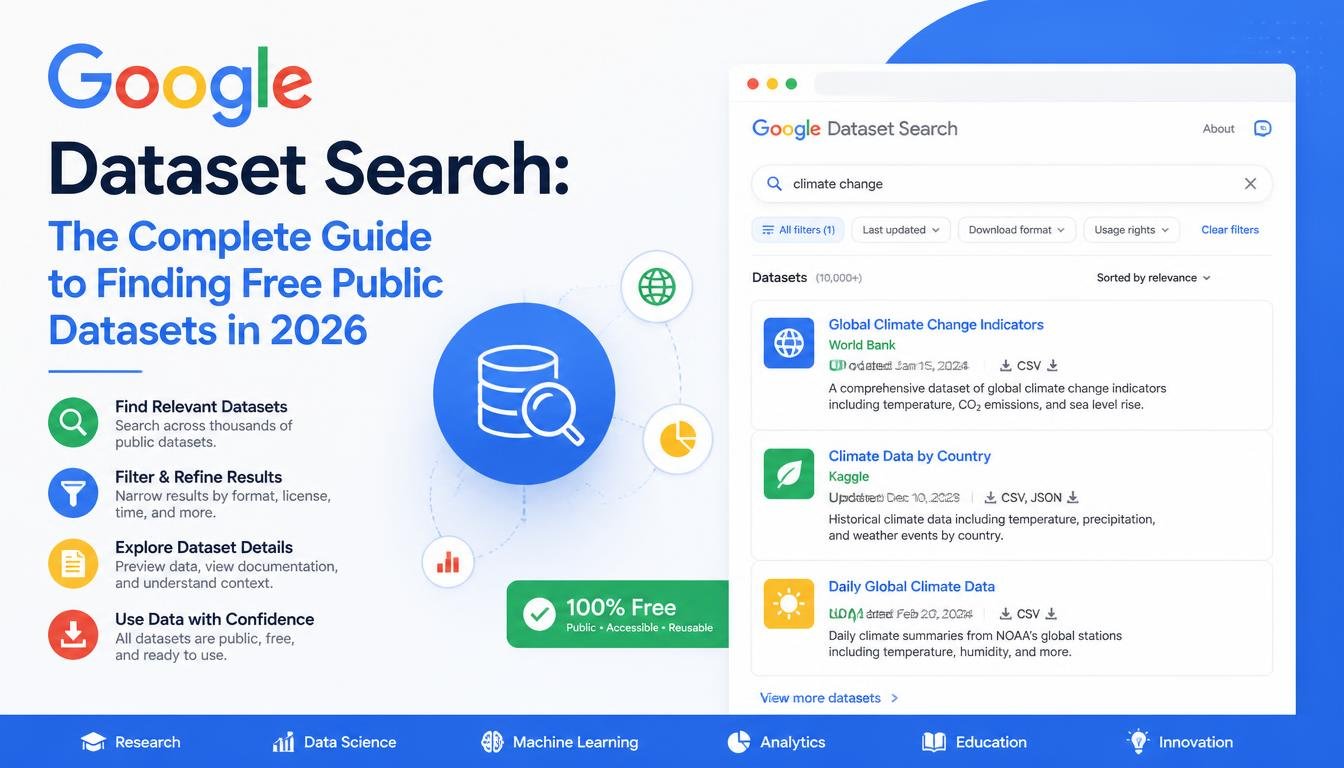
Finding reliable data has become one of the biggest challenges for researchers, students, journalists, developers, business analysts, and artificial intelligence professionals. The internet contains millions of datasets, but locating trustworthy, well-documented, and reusable information often takes hours of searching across government portals, university websites, nonprofit organizations, and scientific repositories. Google Dataset Search was created to simplify this process by acting as a specialized search engine dedicated to datasets rather than ordinary web pages. Instead of manually visiting dozens of websites, users can search one place and discover structured datasets published by thousands of organizations around the world.
Whether you are preparing a university thesis, building a machine learning model, conducting market research, creating business reports, or exploring climate statistics, Google Dataset Search can dramatically reduce the time spent finding quality information. This comprehensive guide explains how Google Dataset Search works, who should use it, its major features, advantages, limitations, and best practices for finding high-quality datasets in 2026.
What is Google Dataset Search?
Google Dataset Search is a specialized search engine developed by Google that helps users discover datasets stored across the internet. Rather than hosting datasets itself, it indexes metadata provided by dataset publishers using structured data standards. When someone searches for information such as population statistics, weather records, healthcare information, economic indicators, biodiversity databases, or transportation data, the search engine displays datasets from universities, governments, research institutions, and international organizations.
Unlike a normal Google Search, which prioritizes websites, articles, blogs, and news stories, Google Dataset Search focuses specifically on structured collections of information. Each search result usually includes a title, publisher, description, licensing information, download links, publication dates, and other metadata that help users evaluate whether a dataset is suitable for their project.
Why Google Dataset Search Matters
Modern industries rely heavily on data-driven decision-making. Businesses analyze customer behavior, governments evaluate economic trends, researchers conduct scientific studies, and developers train artificial intelligence models using massive datasets. Because data has become one of the world’s most valuable resources, finding trustworthy information quickly is increasingly important.
Google Dataset Search centralizes access to millions of datasets from multiple publishers, reducing the time required to search individual repositories. Instead of browsing dozens of websites manually, users can perform a single search and receive results from many different sources. This improves efficiency while increasing the likelihood of discovering relevant information.
How Google Dataset Search Works
Google Dataset Search relies on structured metadata rather than directly storing datasets. Publishers describe their datasets using standardized schema markup that includes information such as the dataset title, creator, publication date, keywords, licensing terms, download format, geographic coverage, and update frequency. Google’s search crawler indexes this metadata and makes it searchable through the platform.
When users enter a keyword, Google’s algorithms analyze metadata from thousands of publishers and rank results according to relevance, completeness, and other search signals. Users can then visit the original publisher’s website to access the dataset.
Key Features of Google Dataset Search
Google Dataset Search offers a wide range of features designed to make dataset discovery faster and more efficient. Users can search across multiple repositories without visiting each website individually, compare datasets from different publishers, review licensing information before downloading data, identify update dates to ensure freshness, and access datasets covering subjects ranging from economics and healthcare to transportation, agriculture, astronomy, education, and environmental science.
The platform also supports multilingual datasets, making it useful for researchers working with international data sources. Since it indexes metadata rather than storing files, users can often access datasets in various formats including CSV, JSON, XML, Excel, GeoJSON, and API-based services depending on the publisher.
Who Uses Google Dataset Search?
Google Dataset Search serves a diverse audience. University students use it to find data for dissertations and academic projects, while professors and researchers rely on it to locate scientific datasets for publications. Data scientists and machine learning engineers use the platform to discover training datasets for predictive models. Journalists search for public records and government statistics to support investigative reporting. Businesses analyze market trends, demographics, and economic indicators to make informed decisions, while nonprofit organizations use open data to measure social impact and guide public policy initiatives.
Benefits of Google Dataset Search
One of the platform’s greatest strengths is efficiency. Instead of spending hours navigating individual repositories, users can search multiple sources simultaneously. This saves valuable time and improves productivity.
Another major advantage is transparency. Metadata often includes licensing information, enabling users to understand whether a dataset can be reused commercially, modified, or redistributed. This is particularly important for organizations that need to comply with copyright and data usage regulations.
Google Dataset Search also increases dataset visibility for publishers. Universities, government agencies, nonprofits, and research institutions can reach a much larger audience by publishing structured metadata that Google’s search engine can index.
Best Practices for Finding High-Quality Datasets
Effective dataset discovery begins with selecting precise keywords rather than broad terms. Instead of searching for “health,” users may obtain better results using specific phrases such as “COVID-19 vaccination rates by country” or “global life expectancy statistics.” Reviewing metadata carefully helps verify publication dates, update frequency, publisher credibility, licensing terms, and geographic coverage before downloading data.
Comparing multiple datasets is equally important because different publishers may collect information using varying methodologies. Understanding these differences helps ensure that analyses are based on reliable and appropriate data sources. Users should also check documentation accompanying datasets to understand variable definitions, missing values, collection methods, and limitations.
Google Dataset Search for Data Science and AI
Artificial intelligence depends heavily on quality training data. Machine learning engineers frequently use Google Dataset Search to locate image collections, natural language processing datasets, medical records, satellite imagery, financial information, and sensor data. High-quality datasets improve model performance while reducing bias introduced by incomplete or poorly documented information.
Because Google Dataset Search indexes datasets from respected academic institutions and international organizations, it provides a valuable starting point for AI researchers seeking trustworthy sources.
Common Types of Datasets Available
Users can discover datasets covering nearly every industry and academic discipline. Common categories include healthcare statistics, education records, environmental monitoring, weather observations, satellite imagery, transportation systems, agriculture, biodiversity, economics, demographics, finance, energy production, crime statistics, sports analytics, public policy, tourism, housing markets, consumer behavior, social sciences, and geographic information systems.
This broad coverage makes the platform useful for professionals across countless fields.
Limitations of Google Dataset Search
Although Google Dataset Search is powerful, it has certain limitations. It only indexes datasets that publishers have properly described using structured metadata, meaning some valuable datasets may not appear in search results. Access restrictions also depend on the publisher; while many datasets are free, others require registration, subscriptions, or institutional access.
Additionally, Google does not verify every dataset’s accuracy. Users remain responsible for evaluating source credibility, methodology, completeness, and licensing before using the data in research or commercial applications.
Tips for Getting Better Search Results
Improving search results often requires experimenting with different keywords, using quotation marks for exact phrases, specifying geographic regions or years, including file formats such as CSV or JSON when appropriate, and reviewing multiple publishers before selecting a dataset. Users should prioritize reputable sources including government agencies, universities, international organizations, and established research institutions to maximize data quality.
The Future of Google Dataset Search
As artificial intelligence, big data analytics, and open science continue expanding, demand for accessible datasets will only increase. Google Dataset Search is expected to play an even larger role in connecting researchers, businesses, educators, and developers with reliable information. Improvements in metadata quality, semantic search, multilingual support, and AI-assisted recommendations may further enhance the platform’s ability to surface relevant datasets quickly and accurately.
Conclusion
Google Dataset Search has become an essential tool for discovering structured information across thousands of trusted publishers worldwide. Whether you are conducting academic research, building machine learning models, analyzing business trends, or exploring public statistics, the platform simplifies the often difficult process of finding reliable datasets. By understanding how it works, using targeted search strategies, and carefully evaluating metadata and licensing, users can locate high-quality data more efficiently than ever before. As data-driven decision-making continues to shape science, business, and technology, Google Dataset Search will remain one of the most valuable resources for anyone working with information in 2026.
Frequently Asked Questions (FAQ)
1. What is Google Dataset Search?
Google Dataset Search is Google’s specialized search engine that helps users discover publicly available datasets from universities, governments, research organizations, and other publishers.
2. Is Google Dataset Search free?
Yes. The search tool is free to use, although individual datasets may have different access or licensing requirements depending on the publisher.
3. Does Google host the datasets?
No. Google indexes dataset metadata and directs users to the original publisher’s website where the dataset is hosted.
4. Who can use Google Dataset Search?
Students, researchers, journalists, businesses, developers, data scientists, educators, and anyone looking for structured data can use it.
5. Can I use datasets for machine learning?
Yes. Many datasets are suitable for AI and machine learning projects, but always review the dataset’s license and documentation before use.
6. What file formats are commonly available?
Common formats include CSV, JSON, XML, Excel, GeoJSON, and API-based data services.
7. How can I find better datasets?
Use specific search terms, verify the publisher, check licensing information, compare multiple datasets, and review the documentation before downloading.
8. Is Google Dataset Search good for academic research?
Yes. It is widely used to discover datasets published by universities, government agencies, international organizations, and research institutions.
Technology
Descargar Video de Instagram: Guía Completa para Guardar Videos en Alta Calidad de Forma Fácil y Segura

Descargar Video de Instagram: La Guía Definitiva
Instagram se ha convertido en una de las plataformas sociales más importantes para compartir contenido visual, incluyendo videos, Reels, Stories y transmisiones en vivo. Cada día millones de usuarios encuentran contenido educativo, inspirador y de entretenimiento que desean conservar para verlo posteriormente, compartirlo con su equipo o utilizarlo como referencia para campañas de marketing. Sin embargo, Instagram no ofrece una función nativa que permita descargar la mayoría de los videos públicos directamente al dispositivo, lo que ha generado una enorme demanda de herramientas especializadas para esta tarea. Si buscas información confiable sobre cómo descargar video de Instagram de forma rápida, segura y en alta calidad, esta guía reúne todo lo que necesitas saber, además de recomendaciones SEO para profesionales del marketing que desean aprovechar este tipo de contenido de forma estratégica.
¿Qué Significa Descargar un Video de Instagram?
Descargar un video de Instagram consiste en guardar una copia local del contenido publicado en la plataforma para poder visualizarlo sin conexión a Internet. Dependiendo del tipo de publicación, es posible descargar videos tradicionales, Reels, Stories o incluso contenido compartido mediante enlaces públicos. Existen múltiples soluciones online que permiten pegar la URL del video y obtener un archivo descargable en pocos segundos. Esta alternativa resulta especialmente útil para equipos de marketing que necesitan analizar campañas, estudiar tendencias, preparar presentaciones o conservar referencias visuales para proyectos futuros.
Ventajas de Descargar Videos de Instagram
Guardar videos de Instagram ofrece numerosos beneficios tanto para usuarios particulares como para profesionales. Entre las principales ventajas se encuentra la posibilidad de acceder al contenido sin conexión, crear bibliotecas de inspiración para campañas, analizar estrategias de la competencia, revisar anuncios exitosos y conservar material educativo. Además, disponer de los archivos facilita la elaboración de informes internos, el estudio del comportamiento del contenido viral y la planificación de futuras publicaciones basadas en tendencias relevantes dentro del sector.
Cómo Descargar un Video de Instagram Paso a Paso
El procedimiento suele ser muy sencillo y no requiere conocimientos técnicos avanzados. Primero debes abrir Instagram y localizar el video que deseas guardar. Después copia el enlace utilizando la opción “Compartir” o “Copiar enlace”. A continuación accede a una herramienta de descarga compatible, pega la URL en el cuadro correspondiente y espera unos segundos mientras el sistema procesa el archivo. Finalmente aparecerá un botón para descargar el video en la máxima calidad disponible. En la mayoría de los casos el proceso funciona desde computadoras, teléfonos Android, iPhone y tabletas sin necesidad de instalar aplicaciones adicionales.
Descargar Reels de Instagram
Los Reels son actualmente uno de los formatos con mayor alcance dentro de Instagram y una fuente constante de ideas para campañas digitales. Descargar Reels permite estudiar estructuras narrativas, duración, efectos visuales, llamadas a la acción y tendencias musicales que generan mayor interacción. Para los especialistas en marketing, analizar este contenido ayuda a identificar patrones de éxito y adaptar estrategias propias sin depender exclusivamente de la conexión a Internet.
Descargar Stories de Instagram
Las Stories desaparecen después de 24 horas, por lo que muchas marcas necesitan conservarlas antes de que expiren. Descargar Stories facilita documentar promociones temporales, campañas estacionales, colaboraciones con influencers y anuncios que pueden servir como referencia para futuras acciones comerciales. También resulta útil para auditorías internas y seguimiento de competidores.
¿Es Seguro Descargar Videos de Instagram?
La seguridad depende principalmente del servicio utilizado. Es recomendable optar por herramientas reconocidas que no soliciten credenciales de acceso a Instagram ni requieran permisos innecesarios. Asimismo, conviene evitar sitios web con exceso de publicidad invasiva o descargas automáticas de software. Mantener actualizado el navegador y utilizar conexiones seguras también contribuye a reducir riesgos.
Consejos SEO para Profesionales de Marketing
Para posicionar contenido relacionado con la palabra clave “descargar video de Instagram”, es recomendable incluir variaciones semánticas como “descargar videos de Instagram gratis”, “guardar Reels de Instagram”, “descargar Stories de Instagram”, “descargar Instagram online” y “descargar videos HD”. Estas variantes enriquecen el contenido y ayudan a captar tráfico procedente de diferentes consultas de búsqueda. También es importante utilizar encabezados jerárquicos, redactar contenido original y profundo, responder a las preguntas frecuentes de los usuarios, optimizar las imágenes con texto alternativo descriptivo y añadir enlaces internos hacia otros artículos relacionados. Una estrategia de enlazado interno sólida, combinada con una buena experiencia de usuario y tiempos de carga rápidos, aumenta las posibilidades de conseguir mejores posiciones en Google.
Errores Comunes al Descargar Videos de Instagram
Uno de los errores más frecuentes consiste en utilizar plataformas poco fiables que solicitan el inicio de sesión de Instagram, lo cual puede comprometer la seguridad de la cuenta. También es habitual descargar archivos de baja calidad cuando existen opciones para obtener resoluciones superiores. Otro problema es reutilizar contenido sin respetar los derechos de autor o las condiciones de uso, lo que puede ocasionar reclamaciones legales o conflictos con los creadores originales. Los profesionales del marketing deben utilizar estos recursos de forma ética y conforme a la normativa aplicable.
Conclusión
Descargar video de Instagram se ha convertido en una necesidad tanto para usuarios cotidianos como para profesionales del marketing digital que desean analizar campañas, conservar contenido relevante y trabajar de manera más eficiente. Utilizando herramientas confiables y aplicando buenas prácticas de seguridad, es posible guardar Reels, Stories y publicaciones en alta calidad desde cualquier dispositivo. Desde el punto de vista SEO, desarrollar contenido amplio, útil y optimizado alrededor de esta temática representa una excelente oportunidad para captar tráfico orgánico y responder a las necesidades reales de los usuarios. La combinación de palabras clave relevantes, contenido de calidad y una estructura bien organizada puede contribuir significativamente a mejorar el posicionamiento en Google.
Preguntas Frecuentes (FAQ)
¿Cómo puedo descargar un video de Instagram gratis?
Puedes copiar el enlace del video y utilizar una herramienta online compatible para descargarlo sin instalar aplicaciones.
¿Se pueden descargar Reels de Instagram?
Sí. La mayoría de los descargadores actuales permiten guardar Reels en alta calidad utilizando únicamente el enlace del contenido.
¿Es posible descargar Stories de Instagram?
Sí, siempre que el contenido sea accesible y la herramienta utilizada sea compatible con Stories.
¿Necesito instalar un programa?
No. Existen numerosos servicios web que funcionan directamente desde el navegador.
¿Es legal descargar videos de Instagram?
La descarga puede estar permitida para uso personal o cuando cuentas con autorización del creador. Si deseas reutilizar el contenido públicamente, debes respetar los derechos de autor y las condiciones de uso aplicables.
¿Puedo descargar videos desde un teléfono móvil?
Sí. Tanto Android como iPhone permiten descargar videos utilizando herramientas online compatibles con navegadores móviles.
¿Cuál es la mejor calidad disponible?
Depende de la calidad original con la que fue publicado el video. Las mejores herramientas descargan el archivo con la resolución máxima disponible.
¿Por qué este tipo de contenido tiene potencial SEO?
Porque millones de usuarios buscan diariamente soluciones relacionadas con descargar videos, Reels y Stories de Instagram. Un artículo completo, optimizado y actualizado puede captar tráfico constante desde Google y responder a múltiples intenciones de búsqueda.
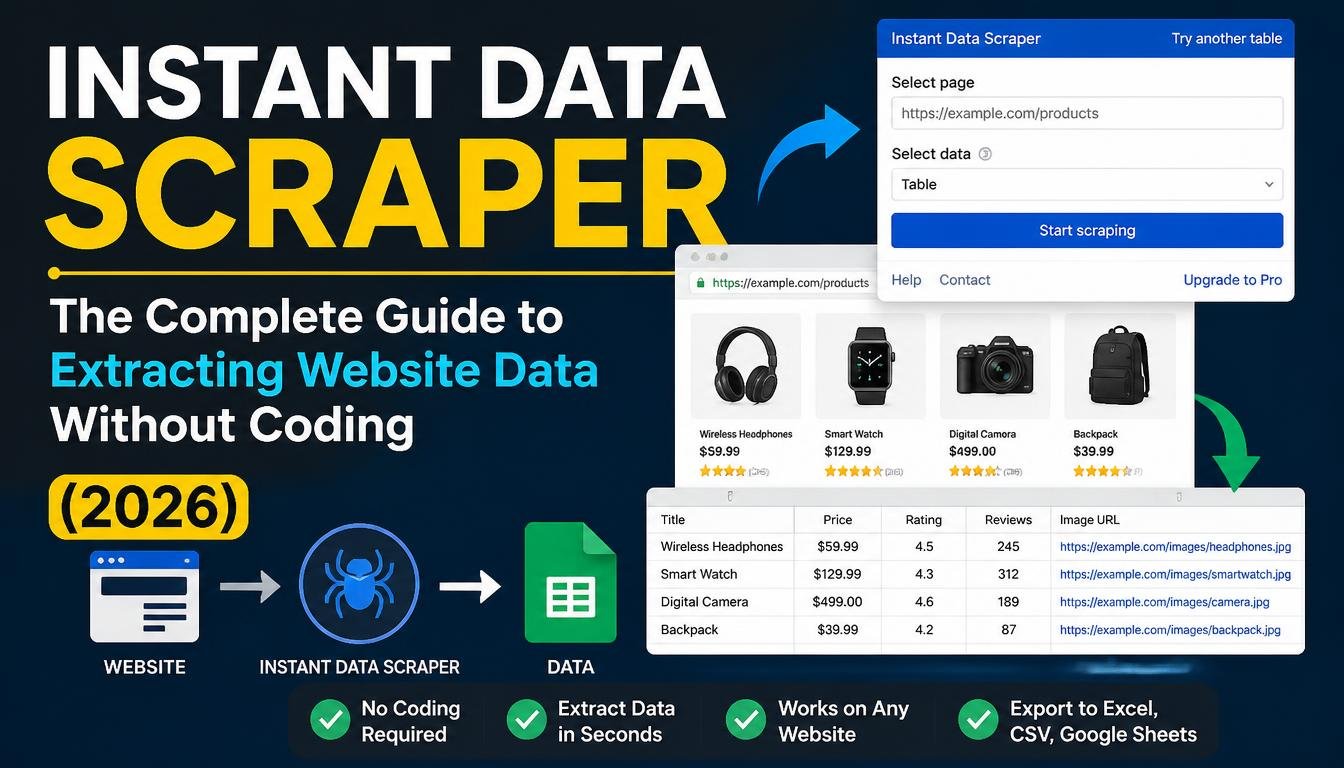
If you are looking for an easy way to extract information from websites without learning programming, Instant Data Scraper is one of the best tools available today. Whether you are collecting product information, generating business leads, performing market research, monitoring competitors, gathering SEO data, or building datasets for analysis, this Chrome extension makes web scraping incredibly simple. Unlike traditional web scraping software that requires coding knowledge or complex configurations, Instant Data Scraper uses intelligent algorithms to automatically detect tables and lists on web pages. This allows users to export structured information in just a few clicks. Businesses, marketers, researchers, eCommerce sellers, students, and data analysts rely on Instant Data Scraper because it saves hours of manual work while improving data accuracy. In this comprehensive guide, you’ll learn everything about Instant Data Scraper, including its features, benefits, installation process, practical use cases, limitations, best practices, and frequently asked questions.
What Is Instant Data Scraper?
Instant Data Scraper is a free Chrome browser extension designed to help users extract structured information from websites quickly and efficiently. Instead of manually copying data from hundreds or even thousands of web pages, the extension automatically identifies lists, tables, directories, search results, product catalogs, and other structured content. Once the information is detected, users can preview the extracted records and export them into CSV or Excel formats for further analysis. One of its biggest strengths is that it eliminates the need for programming languages like Python or JavaScript, making web scraping accessible to everyone. Whether you are a digital marketer collecting competitor prices, a recruiter gathering candidate information, a researcher compiling datasets, or an eCommerce business tracking products, Instant Data Scraper provides a fast and user-friendly solution.
Key Features of Instant Data Scraper
One of the reasons Instant Data Scraper has become so popular is its combination of simplicity and powerful automation. The extension intelligently recognizes data patterns on web pages, reducing the need for manual configuration. Users can scrape product names, prices, contact details, ratings, addresses, images, URLs, descriptions, and many other types of structured information. It also supports pagination, allowing data collection across multiple pages without repeating the extraction process manually. Another valuable feature is data preview, enabling users to verify accuracy before exporting the final dataset. Since the tool exports files in CSV and Excel formats, the collected data can easily be imported into spreadsheet software, databases, CRM systems, or business intelligence platforms.
Benefits of Using Instant Data Scraper
Using Instant Data Scraper offers significant advantages over manual data collection. It dramatically reduces the amount of time spent copying and organizing information while minimizing human errors that often occur during repetitive tasks. Because the extension is free, individuals and small businesses can access professional-grade scraping capabilities without investing in expensive software. Another major benefit is its ease of use. Even users with no technical background can begin scraping websites within minutes after installation. The tool is also flexible enough to support multiple industries, including eCommerce, SEO, digital marketing, lead generation, academic research, journalism, and competitive analysis. By automating repetitive work, users can focus on analyzing information rather than collecting it.
How to Install Instant Data Scraper
Installing Instant Data Scraper is straightforward. Open the Chrome Web Store and search for “Instant Data Scraper.” Click the Install button and add the extension to your Chrome browser. After installation, visit any webpage containing structured information such as a product catalog, directory, or listing page. Click the extension icon, and the software will automatically scan the page to detect available data. Once the correct dataset appears in the preview window, you can navigate through additional pages if needed and then export the collected information in CSV or Excel format. The entire process usually takes only a few minutes and requires no coding experience.
How to Use Instant Data Scraper Step by Step
Using Instant Data Scraper begins by opening the target webpage in Google Chrome. After clicking the extension icon, the software analyzes the webpage structure and identifies extractable data. Review the detected dataset carefully to ensure it contains the desired information. If multiple tables or lists exist on the page, switch between available detection options until the correct dataset is selected. Next, enable pagination if the website contains multiple pages of results. Continue scraping until all relevant pages have been processed. Finally, export the collected data into CSV or Excel format and import it into your preferred spreadsheet or analytics platform for further processing.
Common Use Cases
Instant Data Scraper serves many professional applications. Digital marketers use it to collect competitor pricing, product descriptions, and customer reviews. SEO professionals gather search result data, business listings, and directory information to identify ranking opportunities. Sales teams extract business contacts from online directories to build prospect databases. Researchers compile public datasets for academic projects and statistical analysis. eCommerce sellers monitor competitor inventories and pricing strategies. Journalists gather publicly available information for investigative reporting, while recruiters collect publicly listed candidate information from professional directories. Because the extension supports numerous website layouts, its practical applications continue expanding across industries.
Best Practices for Better Results
To maximize the effectiveness of Instant Data Scraper, always verify the accuracy of detected data before exporting files. Large websites frequently update their layouts, which may require selecting a different detection option. Remove duplicate entries after exporting and organize columns consistently for easier analysis. When scraping multiple pages, monitor pagination carefully to ensure no records are skipped. Respect website terms of service and applicable laws, and avoid excessive automated requests that could impact website performance. Proper planning and data validation improve both efficiency and data quality.
Advantages and Limitations
Instant Data Scraper offers several strengths, including a user-friendly interface, free access, automatic data detection, CSV and Excel export capabilities, pagination support, and compatibility with numerous website layouts. However, like all scraping tools, it has limitations. Websites that rely heavily on advanced JavaScript rendering, CAPTCHA protection, login requirements, or anti-bot technologies may restrict data extraction. Complex dynamic websites sometimes require more advanced scraping frameworks or APIs. Understanding these limitations helps users choose the right tool for each project.
Why Instant Data Scraper Is Popular
The popularity of Instant Data Scraper comes from its balance between simplicity and functionality. Many web scraping tools require programming expertise, proxy management, or complicated workflows. Instant Data Scraper removes these barriers by providing an intuitive point-and-click experience that works for beginners while remaining useful for experienced professionals. Its ability to quickly detect structured data and export it into commonly used formats has made it a preferred choice for marketers, analysts, researchers, and entrepreneurs worldwide.
SEO Tips When Using Scraped Data
When using data collected through Instant Data Scraper for SEO or content creation, focus on adding original analysis and value rather than publishing copied information. Organize datasets into meaningful insights, compare trends, identify opportunities, and present unique conclusions. Search engines reward high-quality, original content that helps users solve problems, so scraped data should serve as a research foundation rather than content for direct republication.
Conclusion
Instant Data Scraper has become one of the most practical browser extensions for anyone who needs structured website data without learning programming. Its intelligent detection system, easy installation, support for pagination, and export options make it suitable for beginners and professionals alike. Whether your goal is lead generation, competitor analysis, SEO research, academic studies, or eCommerce monitoring, the extension can significantly reduce manual work while improving productivity. By following best practices, validating exported information, and using collected data responsibly, users can unlock valuable insights and streamline data collection workflows. As demand for data-driven decision-making continues to grow, Instant Data Scraper remains an excellent solution for fast, accessible, and efficient web scraping.
Frequently Asked Questions (FAQs)
What is Instant Data Scraper?
Instant Data Scraper is a Chrome browser extension that automatically extracts structured data from websites without requiring coding knowledge.
Is Instant Data Scraper free?
Yes, Instant Data Scraper is available free of charge and offers powerful web scraping capabilities for many common use cases.
Do I need programming skills?
No. The extension is designed for users with little or no coding experience and provides a simple point-and-click interface.
Can Instant Data Scraper export data to Excel?
Yes. Users can export extracted information in CSV and Excel-compatible formats for further analysis.
Can it scrape multiple pages?
Yes. The extension supports pagination on many websites, allowing users to collect data across multiple pages.
Is Instant Data Scraper suitable for SEO?
Yes. SEO professionals frequently use Instant Data Scraper to collect directory listings, competitor information, SERP data, and keyword research datasets for analysis.
What kind of data can Instant Data Scraper collect?
It can extract product names, prices, URLs, images, contact information, addresses, ratings, reviews, tables, directories, and other structured website content.
Is web scraping legal?
Web scraping laws vary by jurisdiction and website terms. Users should ensure they comply with applicable laws and the terms of service of the websites they access.

Dan Cogdell: Career, Background, Legal Work, and What to Know

2025 BMW 3 Series: Complete Guide to Price, Specs, Features, and Performance

Karrueche Tran Naked Search: Understanding Online Privacy and Celebrity Rumors

The Complete Guide to Features, Benefits, Trading Tools, and Market Analysis

CDiPhone: Complete Guide, Features, Benefits, Review & Buying Tips (2026)

The Complete Guide to Understanding, Using, and Optimizing Tags for Better Organization and SEO
 Technology3 months ago
The Complete Guide to Features, Benefits, Trading Tools, and Market Analysis
- Technology3 months ago
CDiPhone: Complete Guide, Features, Benefits, Review & Buying Tips (2026)
- Digital3 months ago
The Complete Guide to Understanding, Using, and Optimizing Tags for Better Organization and SEO
- Entertainment3 months ago
What Is Satta Marking? Complete Guide for Beginners
- Tech3 months ago
DX Flash: Complete Guide to Features, Uses, Installation, Benefits, and Troubleshooting
- Celebrity3 months ago
Trump Tees It Up With Hall of Fame: Complete Story, Event Highlights, and Why It Matters
- Entertainment3 months ago
MMA Stream Reddit: 9 Powerful Legal Ways to Watch Fights Online
- Lifestyle3 months ago
B&Q Altrincham: Complete Store Guide, Products, Services, Opening Hours & Shopping Tips